
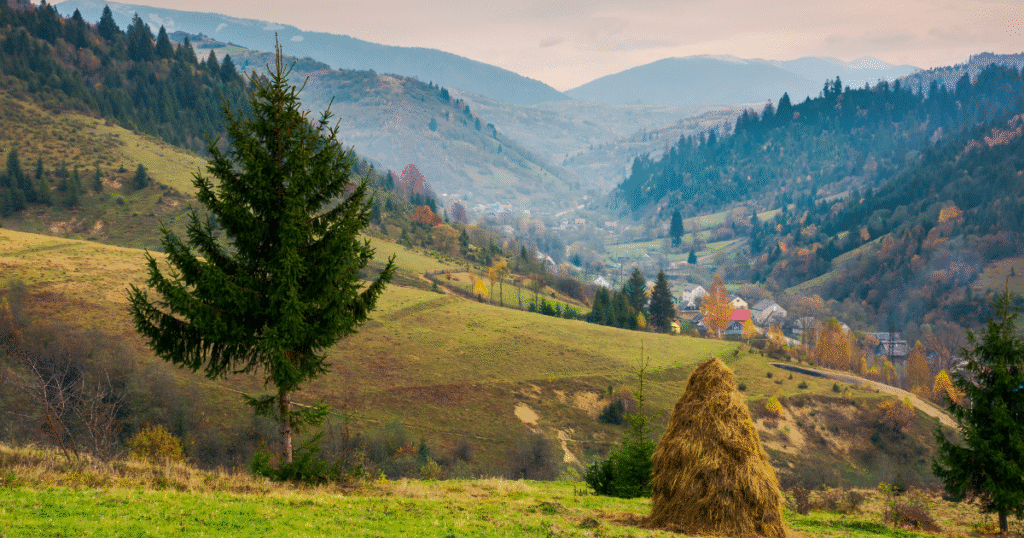
Europe needs its rural areas. Are Member States and regions ready to unlock their potential?
Europe cannot meet its biggest challenges without its rural areas. The European Commission’s proposals for the next EU budget open new opportunities for community-led development. But will Member States and regions turn these opportunities into reality?
Europe is facing profound transformations. Artificial intelligence and digitalisation are changing our economies and everyday lives. Demographic change is reshaping our societies. Climate change, biodiversity loss, the energy transition and growing security concerns are challenging how we live, produce and organise our communities.
If Europe wants to strengthen its competitiveness, resilience and democracy, it needs the contribution of all its territories — including its rural areas.
Rural communities are not simply places affected by these changes. They have resources, knowledge, businesses, people and ideas that Europe needs to address them.
After all, how can we imagine a resilient Europe without its rural areas? Who will manage our natural resources, maintain local production and small-scale industries, and contribute to our food and energy security? How can we tackle climate change and biodiversity loss without the people who live and work in the territories where so much of this transition must take place? Who will keep our nations safe if we have vast areas without population?
And how can we strengthen European democracy and social cohesion if people feel left behind, with little influence over the future of their own communities?
The right to stay is not only about ensuring that people can continue living where they choose. It is also about giving them the opportunity to build a future there. Europe needs its rural communities not only to survive these transformations, but to help shape them. The question is whether we are giving them the opportunity to do so.
EU is opening a door
ELARD is closely following the negotiations on the future EU budget and their implications for LEADER and Community-Led Local Development (CLLD).
We are in regular dialogue with the European institutions. Most recently, on 21 September, we met with representatives of DG REGIO, DG AGRI, DG BUDG and DG MARE to discuss the future of LEADER. We have also raised our concerns directly with the highest levels of the European Commission, including the office of President Ursula von der Leyen.
What we see could be encouraging.
The European Commission’s proposals for the 2028–2034 budget offer new opportunities. LEADER is proposed to remain mandatory, while the new National and Regional Partnership Plans (NRPPs) could allow Local Action Groups (LAGs) to work across several policy areas.
In our discussions with the Commission, we have also been informed that the commitment to a rural spending target will be pursued further, although it is not yet fully reflected in binding legislative provisions.
As the Rural Pact recently highlighted in an article, the new framework could help move CLLD from being multi-funded to becoming genuinely multi-sectoral.
This matters. Europe’s challenges do not fit neatly into separate agricultural, regional, social or environmental policy boxes. Why should our local development approaches be confined to them?
In its reply to ELARD dated 7 October , the office of Commission President Ursula von der Leyen reaffirmed the importance of territorial cohesion and recognised the distinctive bottom-up governance of LEADER and CLLD, with citizens involved in local decision-making.
These are encouraging signals. The proposed European framework offers possibilities for a broader role for local partnerships. Whether those possibilities are used will depend largely on the choices made by Member States and regions.
Rural communities need the power to act
Europe already has more than 2,600 Local Action Groups connecting citizens, businesses, municipalities and civil society. They are established partnerships with local knowledge, networks and experience in making things happen.
ELARD is involved in several Horizon Europe projects, and our experience from these projects continues to reinforce something that those of us working with Local Action Groups have known for a long time: LEADER works. CLLD works.
Through the EU-funded RUSTIK project, we are exploring the importance of agency: the ability of local communities to understand the transformations affecting them and actively shape their own future.
This is where LAGs can play a much greater role.
But agency requires more than access to project funding. Local partnerships need knowledge, capacity, resources and, importantly, a mandate to act and influence decisions.
We cannot expect rural communities to contribute to Europe’s major transitions if we only invite them to implement decisions made elsewhere.
The possibilities are there. But are Member States using them?
This is where ELARD is becoming concerned.
We have started mapping how LAGs and their representative networks are being involved in the preparation of the future NRPPs. The work is still ongoing, but the first indications raise concerns.
Are Member States using the new framework to rethink territorial development? Or are we at risk of simply reproducing the structures and priorities of previous programming periods?
We see a significant risk that, in many Member States, LEADER will once again be treated mainly as an agricultural instrument, while the possibilities for using local partnerships in cohesion policy, innovation, social inclusion, climate action and resilience remain unexplored.
We understand that changing established structures is not easy. But the purpose of a more integrated framework should be to make new approaches possible, not simply to reorganise existing programmes.
The Commission is opening the door. Member States and regions now need to decide how to use the opportunities this creates. And that requires involving local partnerships from the very beginning of NRPP programming — when priorities are being defined, not when the plans are almost finished.
We need genuine partnership with civil society. LAGs and their representative networks are well placed to bring local perspectives, experience and knowledge into these processes.
Europe cannot afford to leave this potential unused
For more than 30 years, Europe has invested in building local partnerships through LEADER. Today, these partnerships could help connect European ambitions with local knowledge, initiative and action.
Of course, they need adequate funding and genuine decision-making powers. But this discussion is about much more than protecting an existing programme. It is about recognising rural areas as active contributors to Europe’s future — not merely as recipients of development support.
At the same time, negotiations on the next Multiannual Financial Framework and its programmes are entering a decisive phase. The Irish Presidency of the Council has proposed substantial reductions to the Commission’s budget proposal in an effort to bridge differences between Member States. Meanwhile, Europe’s regions are raising concerns about increasing centralisation and calling for a stronger role in shaping and implementing EU policies.
These discussions are closely connected to the future of LEADER and CLLD. It is not only about how much money Europe invests, but also about who gets to decide how it is used and whether local communities have a real say.
ELARD will continue to follow the national programming processes and advocate for meaningful participation of LAGs and their networks.
Europe needs its rural areas to meet the challenges ahead. The opportunities are there. Now we need to make sure they are used.
Marion Eckardt
ELARD Executive Director and Policy Lead
Further reading: